Watercolor Strawberry Patterns: A Practical Guide to Design, Decor, and Digital Assets
In the realm of digital design, few motifs capture the essence of summer and rustic charm quite like watercolor strawberry patterns. These illustrations offer a unique blend of organic texture and vibrant color that stands apart from rigid vector graphics or standard clip art. For designers, crafters, and decorators seeking to infuse projects with a sense of warmth and hand-crafted authenticity, this specific style provides a versatile toolkit. The collection described here, featuring high-quality digitized watercolor illustrations, represents a significant step up in utility for those looking to create seamless backgrounds, borders, and decorative elements.
Understanding the Distinctive Qualities of Watercolor Strawberry Art
What truly distinguishes a premium set of watercolor strawberry patterns from generic imagery is the treatment of light, texture, and transparency. Unlike flat illustrations that rely on solid lines and uniform fills, watercolor styles mimic the natural bleeding of pigment on paper. This creates depth and variation that feels organic rather than manufactured. In the context of the available collection, the artist has captured the juicy redness of the fruit alongside the soft greens of the leaves, resulting in a visual experience that is both appetizing and aesthetically pleasing.
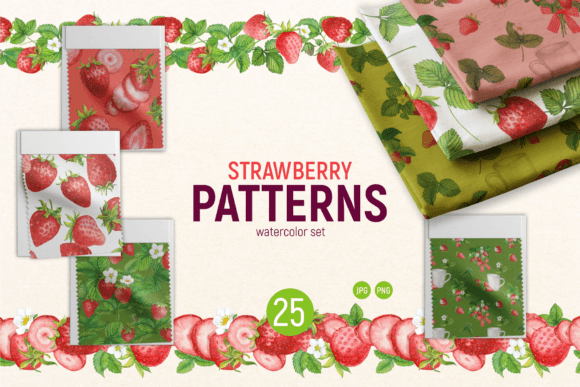
The technical execution of these assets is equally important. The collection includes five PNG patterns and fifteen additional patterns on colored backgrounds, all provided in JPG format as well. Crucially, the PNG files feature transparent backgrounds. This feature transforms how these images can be integrated into complex designs. When working with watercolor strawberry patterns, the ability to layer textures without harsh white boxes around the edges allows for seamless integration into textiles, packaging, and web interfaces. The resolution of 300 dpi ensures that whether the output is a small accessory tag or a large wall mural, the image remains crisp and professional.
Evaluating Format Options: Seamless Backgrounds vs. Discrete Elements
When selecting digital assets, one must consider the intended application. The available resources offer two distinct formats that serve different purposes within the design workflow. The first category involves ready-made seamless backgrounds. These are tiles that repeat perfectly, making them ideal for creating full-page textures, wrapping paper, or fabric prints. For a designer working on a rustic-themed wedding invitation or a children's room wallpaper, a seamless pattern eliminates the need for manual tiling and alignment, saving significant time.
The second category focuses on discrete elements, specifically the five seamless borders included in the archive. Borders are essential for framing content, defining sections in a layout, or adding a finished look to a product label. Having these pre-designed in a watercolor style means the user does not have to manually crop and align individual strawberries to create a frame. This distinction between full-pattern coverage and border accents is critical when planning a project. If the goal is to cover an entire surface, the seamless backgrounds are the primary choice. If the objective is to highlight specific text or images, the borders provide the necessary structure without overwhelming the composition.
Comparing Watercolor Styles with Vector and Photorealistic Alternatives
Designers often face a triage of styles when choosing assets: photorealistic photography, crisp vector graphics, or painterly watercolor. Each has its merits, but watercolor strawberry patterns occupy a specific niche that neither of the other two can fully replicate.
- Photorealism: High-resolution photographs of strawberries offer undeniable realism. However, they often contain complex lighting conditions, shadows, and backgrounds that are difficult to isolate. Using a photo for a background pattern can result in a busy, cluttered look that competes with text or other design elements. Watercolor illustrations simplify the subject matter, focusing on shape and color while removing distracting photographic noise.
- Vector Graphics: Vector art is excellent for scalability and clean lines. It is perfect for logos and technical diagrams. Yet, vectors can sometimes feel sterile or too "perfect" for projects aiming for a cozy, vintage, or handmade aesthetic. The slight imperfections inherent in watercolor strokes—such as varying opacity and soft edges—convey a human touch that pure geometry cannot match.
The strength of the watercolor strawberry patterns collection lies in its middle ground. It offers the artistic soul of a painting with the practical utility of a digital asset. The RGB color format ensures vibrancy on screens, while the 300 dpi resolution maintains quality for print. This makes it superior to low-quality scanned paintings and more atmospheric than standard vector icons.
Ideal Use Cases: From Textiles to Digital Products
The versatility of these assets extends across various industries and creative pursuits. Because the collection is designed with a rustic theme in mind, it naturally fits well in contexts where warmth and nostalgia are desired. One of the most prominent applications is in the textile industry. Printing these patterns on cotton or linen for aprons, tablecloths, or summer dresses leverages the softness of the watercolor style to create garments that feel comfortable and inviting.
Similarly, the decor sector benefits greatly from these designs. Imagine a nursery mobile, a framed print for a kitchen wall, or custom wrapping paper for a boutique shop. The transparent background capability of the PNG files allows graphic designers to easily place the strawberries onto wooden textures, kraft paper, or pastel gradients to create layered compositions. For printed products like business cards, menus, or packaging, the 300 dpi resolution ensures that the final physical product looks as polished as the digital file.
Digital creators will also find value in these assets. Bloggers designing headers, social media managers creating story templates, or app developers building child-friendly interfaces can utilize the bright, colorful set to add personality to their work. The inclusion of borders is particularly useful for framing quotes or highlighting special offers in email newsletters, providing a cohesive visual identity without requiring extensive design skills.
Tradeoffs and Considerations for Decision Makers
While the watercolor strawberry patterns collection offers numerous advantages, it is important to acknowledge potential limitations to ensure the right fit for every project. The primary tradeoff involves the nature of the medium itself. Watercolor implies a level of softness and blending that may not suit brands requiring a stark, modern, or industrial aesthetic. If a client is looking for a sleek, minimalist tech product line, these organic, fruity patterns might clash with their brand identity.
Another consideration is the file format variety. While the collection provides both PNG and JPG options, users must be aware of the differences. JPG files are compressed and do not support transparency, meaning they will always have a solid background (usually white or colored). This is fine for simple overlays on matching backgrounds but problematic for complex layering. The PNG files solve this issue but require software that supports alpha channels. Additionally, the RGB color format is optimized for screens; while suitable for many digital-to-print workflows, users printing on specialized CMYK printers should verify color accuracy, as RGB colors can sometimes appear slightly less saturated in print than on a monitor.
Making the Right Choice for Your Project
Ultimately, deciding whether to incorporate watercolor strawberry patterns into a project depends on the desired emotional resonance of the final output. If the goal is to evoke feelings of freshness, summer, home cooking, or artisanal craftsmanship, this collection is an exceptional resource. The combination of high-resolution scans, transparent layers, and seamless tiling capabilities removes much of the technical friction typically associated with using illustrated assets.
For professionals who value efficiency, having a ZIP archive containing 5 PNG patterns, 15 colored backgrounds, and 5 seamless borders means that a wide range of design needs can be met with a single purchase. Whether decorating dishes, accessories, or textiles, the consistent style ensures a unified look across all materials. By understanding the strengths of this specific watercolor approach and recognizing where it fits within the broader landscape of design tools, creators can make informed decisions that elevate their work. The result is a collection that not only serves as a visual element but as a foundational component for building cohesive, charming, and professional designs.