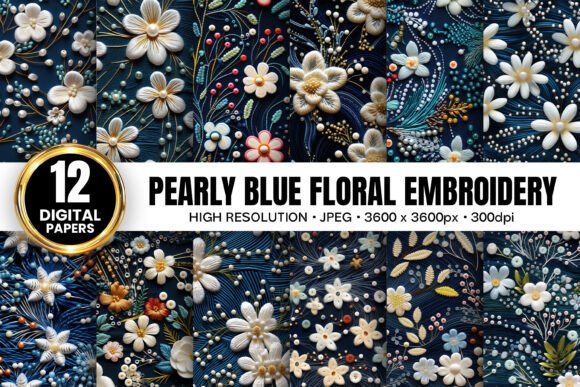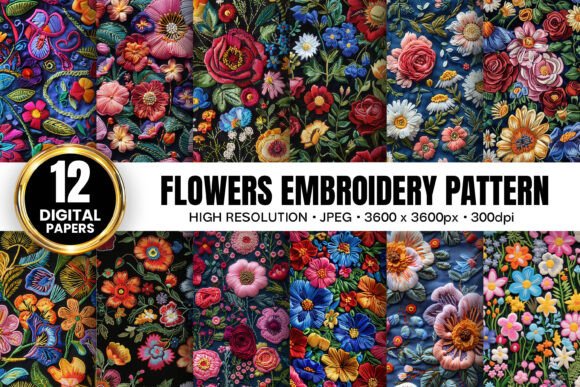
Flowers Embroidery Seamless Patterns: A Comprehensive Guide to Digital Paper for Creative Projects
In the realm of digital crafting and design, finding high-quality resources that bridge the gap between traditional aesthetics and modern technology is essential. Flowers Embroidery Seamless Patterns represent a specific category of digital assets that have gained significant traction among designers, crafters, and small business owners. These patterns are not merely decorative images; they are meticulously crafted digital papers designed to replicate the intricate texture and charm of hand-embroidered floral motifs while offering the versatility required for contemporary production workflows.
When evaluating options for creative projects, it is crucial to understand what distinguishes these seamless patterns from standard stock photography or vector illustrations. The core value lies in their continuity. Unlike isolated floral graphics that require manual tiling, Flowers Embroidery Seamless Patterns are engineered to repeat perfectly without visible seams. This characteristic makes them ideal for applications requiring large surface coverage, such as fabric printing, wallpaper design, or wrapping paper creation. By utilizing a collection like the one featuring 12 high-resolution digital papers, creators can access a diverse range of floral styles within a single, cohesive package.
Distinguishing Features of High-Resolution Floral Digital Papers
The technical specifications of a digital asset often dictate its suitability for various end uses. The product in question offers files at 300 DPI (dots per inch) with dimensions of 3600 x 3600 pixels, equating to 12 inches by 12 inches at full resolution. This level of detail is critical for professional-grade output. When comparing these seamless patterns to lower-resolution alternatives found on free image repositories, the difference becomes immediately apparent upon scaling or printing.
Standard web images often suffer from pixelation when enlarged, rendering them unsuitable for physical products like custom apparel or textile designs. In contrast, the 300 DPI standard ensures that the delicate stitches and shading inherent in an embroidery aesthetic remain crisp and clear. This distinction is particularly important for users who intend to print their designs on demand. Whether creating a scrapbook layout or a book cover, the fidelity of the Flowers Embroidery Seamless Patterns ensures that the final result looks polished and intentional rather than amateurish.
Furthermore, the format of these assets—JPG files packaged in a convenient ZIP archive—offers a balance between compatibility and file size. While vector formats provide infinite scalability, they often require specialized software like Adobe Illustrator. The JPG format used here allows for immediate use in popular raster-based design tools such as Photoshop, Canva, or GIMP. This accessibility lowers the barrier to entry for hobbyists while remaining robust enough for commercial applications.
Evaluating Use Cases: From Stationery to Textile Design
The versatility of Flowers Embroidery Seamless Patterns extends across a wide spectrum of creative industries. One of the primary strengths of this resource is its adaptability. For instance, in the world of gift wrapping, a seamless pattern allows a designer to create a unique background that covers an entire sheet of paper without awkward interruptions. This is a significant advantage over using scattered clipart, which often leaves empty spaces that must be filled manually.
Similarly, in the realm of greeting cards and invitations, the texture provided by an embroidery-style pattern adds a tactile feel to digital designs. Even though the medium is digital, the visual cue of threadwork evokes a sense of warmth and personalization that appeals to recipients. When designing planners or journals, these patterns serve as effective backgrounds that do not overpower text elements, provided the color palette is chosen carefully.
For those involved in physical product manufacturing, the implications are even more profound. Custom apparel prints and textile fabric designs rely heavily on the quality of the underlying image. If a pattern does not tile seamlessly, the resulting fabric will show visible grid lines where the pattern repeats, ruining the garment's appearance. The 12-inch square format of these digital papers is also highly compatible with standard cutting machine mats, making them perfect for DIY crafts involving vinyl or cardstock.
Additionally, the trend of "junk journaling" has surged in popularity among adults aged 20 to 50 who enjoy mixed-media art. In this context, Flowers Embroidery Seamless Patterns act as foundational layers. They can be printed, torn, and collaged alongside vintage ephemera to create textured, nostalgic layouts. The ability to wrap tumblers or create wall art further demonstrates how these digital assets can transition from screen to physical object seamlessly.
Comparative Analysis: Seamless Patterns vs. Alternatives
When researching resources for floral designs, consumers often encounter several different categories of assets. Understanding the tradeoffs between Flowers Embroidery Seamless Patterns and other options helps in making an informed decision.
- Seamless Patterns vs. Isolated Clipart: Isolated flowers offer flexibility in arrangement but require time-consuming editing to create a cohesive background. Seamless patterns save time by providing an instant backdrop, though they offer less control over individual element placement. If the goal is speed and consistency, the seamless option is superior.
- Digital Paper vs. Vector Graphics: Vector files are scalable but often lack the nuanced texture of embroidery unless specifically rendered. Raster-based digital papers like these JPGs capture the subtle imperfections and shading of thread work better than clean vector lines. However, vectors are better for logos or text-heavy designs.
- Printed Paper vs. Digital Downloads: Purchasing physical sheets of patterned paper limits the user to pre-existing colors and textures. Digital downloads allow for customization, such as adjusting brightness or overlaying other elements before printing. The only limitation here is the need for a capable printer and appropriate paper stock.
Another consideration is the cost-benefit ratio. While free online resources exist, they often come with inconsistent quality, watermarks, or restrictive licensing. A curated set of 12 high-resolution papers provides a reliable foundation for multiple projects, reducing the need to search for individual images repeatedly. This consolidation of resources is particularly valuable for professionals managing tight deadlines.
Navigating Limitations and Managing Expectations
While Flowers Embroidery Seamless Patterns offer numerous benefits, it is important to acknowledge potential limitations to ensure realistic expectations. One of the most common issues arises from monitor calibration. Colors displayed on screens vary significantly based on hardware settings and lighting conditions. A soft pastel blue on one monitor might appear vibrant teal on another. Consequently, actual colors may vary slightly depending on how the image is printed out.
To mitigate this, users should always perform a test print on standard paper before committing to expensive materials like fabric or specialty cardstock. Additionally, because these are raster images (JPG), they are not infinitely scalable. Enlarging a 3600-pixel image beyond its native resolution will eventually result in blurriness. Therefore, planning the output size beforehand is a necessary step in the workflow.
There is also the factor of licensing. As digital products, these patterns are typically licensed for personal or commercial use, but the terms can vary. Users intending to sell physical products made with these designs must verify the specific usage rights included with the download. Some licenses may restrict the number of items produced or prohibit resale of the digital file itself. Clear understanding of these terms prevents legal complications later.
Decision Factors: Choosing the Right Resource
Deciding whether to invest in a set of Flowers Embroidery Seamless Patterns depends largely on the nature of the project and the desired outcome. If you are a student working on a school presentation or a hobbyist creating a simple birthday card, free resources might suffice. However, if you are launching a brand, selling handmade goods on platforms like Etsy, or producing marketing materials for a business, the investment in high-quality, consistent assets is justified.
The decision is further influenced by the need for thematic consistency. Using a single source for 12 variations of floral embroidery ensures that all elements of a project share a unified style. Mixing and matching free images from different sources often results in a disjointed look due to varying line weights, color palettes, and artistic styles. For branding purposes, this uniformity is invaluable.
Moreover, the time saved in searching for and editing images translates directly into productivity. With 12 ready-to-use patterns, a designer can focus on the creative composition rather than technical adjustments. This efficiency is a key advantage for those balancing multiple projects or running a small creative enterprise.
In conclusion, Flowers Embroidery Seamless Patterns occupy a unique niche in the digital asset market. They combine the aesthetic appeal of traditional needlework with the practicality of modern digital files. By offering high resolution, seamless tiling, and a variety of floral designs, they cater to a broad audience ranging from scrapbook enthusiasts to textile designers. While no tool is perfect, and factors like color variance and resolution limits must be managed, the overall utility of these digital papers makes them a strong contender for anyone looking to elevate their creative output. Whether for wrapping gifts, designing stationery, or creating custom apparel, these patterns provide a reliable and visually stunning foundation for your next project.