Floral and Leafy Watercolor Patterns: A Comprehensive Evaluation
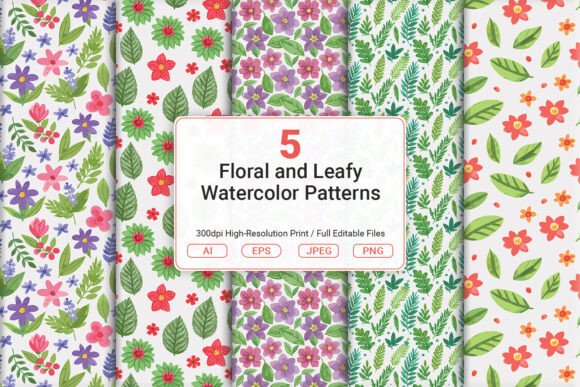
In the realm of digital design, Floral and Leafy Watercolor Patterns represent a specific category of assets that blend organic aesthetics with technical utility. These patterns are not merely decorative images; they are high-resolution, seamless textures designed to replicate the fluid, translucent qualities of traditional watercolor painting. For designers, artists, and creators seeking to incorporate nature-inspired elements into their work without the time commitment of hand-painting, these digital assets offer a streamlined solution. This evaluation explores the characteristics, applications, and practical considerations of using this specific set of five beautiful floral and leafy watercolor patterns.
Understanding the Asset Composition
The core value of this pattern set lies in its composition and format versatility. The collection features five distinct designs, each capturing the delicate interplay between blooms and foliage. Unlike rigid vector illustrations or flat clip art, watercolor patterns introduce texture, color variation, and a sense of movement that mimics real-world media. The inclusion of open-source Ai Illustrator Files is a significant technical advantage, allowing users to modify colors, adjust layer opacity, or isolate specific elements before finalizing their projects.
Alongside the editable source files, the package provides Eps File formats for compatibility with various vector-based software, ensuring scalability without loss of quality. Furthermore, the raster options—JPG and PNG files at 3600 x 3600 pixels (12 x 12 inches)—provide immediate usability for high-resolution printing and web display. This multi-format approach ensures that the patterns can be utilized across different workflows, from professional print production to quick digital mockups.
Primary Applications and Versatility
The utility of Floral and Leafy Watercolor Patterns extends across a wide spectrum of creative industries. Their primary strength is their ability to add a touch of nature to diverse design contexts. Below are the key areas where these patterns are most effectively deployed:
- Fabric Print on Demand Products: The high resolution (3600 x 3600 pixels) makes these patterns suitable for textile printing. When scaled correctly, the watercolor edges remain crisp, creating unique apparel, scarves, or home decor items.
- Gift Wrapping and Stationery: The aesthetic appeal of these designs makes them ideal for wrapping paper and greeting cards. They provide an elegant backdrop that elevates the perceived value of the gift or message.
- Printed Materials: Notebooks, binders, planners, and journal covers benefit significantly from these textures. The organic feel of the patterns complements the tactile experience of paper goods.
- Digital Backgrounds and Wall Art: Whether used as wallpapers for devices or as prints for wall art, the patterns offer a sophisticated look that fits both modern and traditional interior styles.
- Invitations: For weddings, baby showers, or corporate events, these patterns serve as excellent backgrounds that convey warmth and sophistication.
Benefits of Using Digital Watercolor Assets
Adopting Floral and Leafy Watercolor Patterns offers several tangible benefits over creating similar designs from scratch. The most immediate advantage is efficiency. Creating a seamless, high-quality watercolor pattern manually requires significant artistic skill and time. By utilizing pre-made assets, creators can focus on layout, typography, and overall composition rather than the intricacies of brushwork.
Additionally, the availability of Ai Illustrator Files allows for customization. If a client prefers a blue hue instead of the original pink, or if a specific flower needs to be removed to accommodate text, the vector and layered nature of the files facilitates these changes easily. This flexibility reduces the need for multiple purchases to achieve slight variations in style.
Tradeoffs and Considerations
While the benefits are substantial, potential users must consider certain tradeoffs. First, the "hand-painted" look, while convincing, is still a simulation. Close inspection under magnification may reveal the limitations of digital rendering compared to genuine watercolor on paper, particularly regarding paper grain absorption and pigment bleeding. For ultra-high-end fine art reproduction, this distinction might be relevant.
Another consideration is file management. While the package includes multiple formats, working with 3600 x 3600 pixel files can be resource-intensive for older computers or basic editing software. Users should ensure their hardware can handle large raster files without lag. Furthermore, reliance on pre-made patterns means the design is not entirely unique to the user's brand unless significant modifications are made. In highly saturated markets, there is a risk that the pattern may appear on other products if purchased by competitors.
Situational Fit: When to Choose This Pattern Set
This asset set is a strong fit for professionals who require a balance between aesthetic quality and production speed. It is particularly recommended for:
- Small Business Owners: Those launching print-on-demand shops or Etsy stores who need professional-grade assets without hiring a dedicated illustrator.
- Graphic Designers: Freelancers working on tight deadlines who need reliable background textures for invitations, packaging, or editorial layouts.
- Hobbyists and Crafters: Individuals creating physical journals, scrapbooks, or custom gifts who have access to standard design software.
The presence of open-source Ai Illustrator Files makes this set especially valuable for those who intend to integrate the patterns into complex vector compositions or need to scale the artwork for large-format printing.
When Alternatives May Be Preferable
Despite its strengths, Floral and Leafy Watercolor Patterns may not be the optimal choice for every scenario. If a project demands a strictly minimalist, geometric, or abstract aesthetic, the organic complexity of these floral designs could clash with the intended visual language. Similarly, if the goal is to create a completely proprietary brand identity with no shared elements, purchasing a widely available pattern pack might not suffice without heavy modification.
For projects requiring extremely low file sizes, such as mobile app icons or small web thumbnails, the full 3600 x 3600 pixel resolution may be overkill. In such cases, simpler vector icons or lower-resolution textures might be more efficient. Additionally, if the budget is extremely limited and the user possesses advanced illustration skills, commissioning a custom piece or learning to create one's own patterns might yield better long-term results than buying a generic set.
Practical Decision-Making Insights
To determine if this pattern set aligns with your goals, evaluate your current workflow and output requirements. Ask yourself if you need a nature-inspired texture that can be easily edited. If you frequently produce fabric prints or stationery, the inclusion of Eps File and high-resolution PNG options suggests this product is well-suited for your needs. However, if your work relies heavily on unique, non-repetitive imagery, consider whether the cost of modification justifies the purchase price.
Ultimately, the decision rests on the balance between customization and convenience. Floral and Leafy Watercolor Patterns provide a robust foundation for nature-themed design projects. By understanding the technical specifications and the range of applications—from wallpapers to gift wrapping—creators can make an informed choice that enhances their portfolio while maintaining professional standards.