Seamless Geometric Leaves Patterns: A Comprehensive Evaluation
In the realm of digital design and textile production, the demand for high-quality, versatile graphics has never been higher. Seamless Geometric Leaves Patterns represent a specific category of vector-based or raster-based imagery that combines organic botanical forms with structured mathematical precision. This collection offers a unique intersection where nature meets geometry, providing designers with a toolset that is both aesthetically pleasing and technically robust. The specific asset described here comprises 80 distinct variations rendered in high resolution, catering to professionals who require reliability and variety in their creative workflows.
Understanding the Core Concept
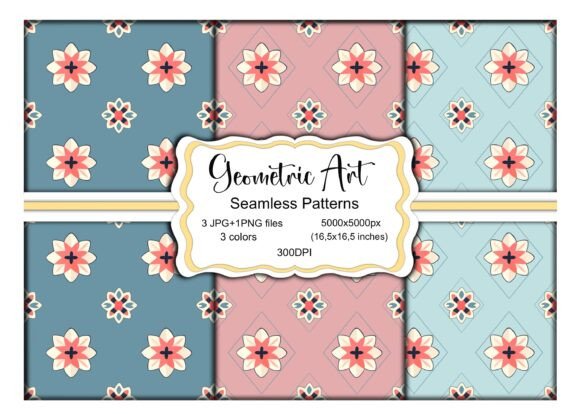
The term Seamless Geometric Leaves Patterns refers to repeating designs where leaf motifs are stylized into geometric shapes—triangles, polygons, and lines—that interlock perfectly without visible breaks at the edges. Unlike traditional illustrations which may have irregular borders, these patterns are engineered to tile infinitely. When applied to a surface, whether it is a fabric roll, a wallpaper installation, or a digital background, the eye perceives a continuous field rather than a repeated grid of images.
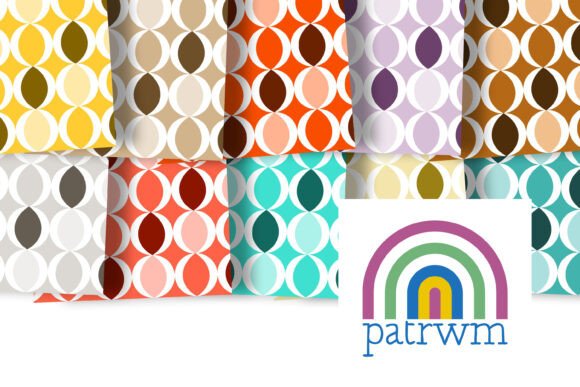
This specific collection expands on that concept by offering 80 unique colorways. Each pattern is supplied as a 3600px by 3600px JPEG file. This dimension equates to 12 inches by 12 inches at 300 dots per inch (DPI). This resolution is critical because it ensures that the image retains sharpness and detail even when printed at large scales. The files are organized within a zipped folder for efficient transfer and storage, allowing users to access the entire library without navigating complex directory structures.
Why Professionals Seek This Asset
Designers and manufacturers often face the challenge of finding graphics that bridge the gap between modern minimalism and natural warmth. Purely abstract geometric patterns can sometimes feel cold or sterile, while realistic leaf illustrations may lack the structural consistency required for industrial manufacturing. Seamless Geometric Leaves Patterns solve this dichotomy.
- Versatility: The geometric abstraction allows the pattern to fit into various design languages, from mid-century modern to contemporary Scandinavian styles.
- Scalability: The 3600px resolution supports applications ranging from small business cards to large-scale architectural murals.
- Color Variety: With 80 different colors provided, users do not need to spend time recoloring assets manually. This significantly reduces the production timeline for projects requiring multiple color options.
Technical Specifications and Practical Benefits
The technical specifications of this package are designed to meet industry standards for print and web media. The 300 DPI requirement is the gold standard for high-quality printing. At this density, individual pixels are invisible to the naked eye at a normal viewing distance, ensuring that the transition between geometric shapes remains crisp.
The 12 x 12 inch physical size at 300 DPI provides a substantial canvas for testing. Designers can place elements over the pattern to gauge contrast and visibility before committing to a full project. Furthermore, the JPEG format, while lossy, is universally compatible. It requires less processing power than TIFF files and loads faster on websites, making it an excellent choice for e-commerce product previews or digital portfolios.
Having 80 variations in a single zipped folder streamlines the asset management process. Instead of searching through dozens of disparate downloads, a user can import the entire set into their design software's library. This organization facilitates rapid prototyping, allowing a designer to toggle through color options instantly to find the perfect match for a client's brand palette.
Evaluating Suitability: Where It Fits Best
Determining if this asset aligns with your goals depends heavily on the intended application. Seamless Geometric Leaves Patterns are particularly strong fits for the following scenarios:
- Textile and Apparel Design: The seamless nature makes these ideal for fabric printing. The 300 DPI resolution ensures that prints on cotton, silk, or synthetic blends will appear sharp without pixelation.
- Interior Decor: For wallpaper, throw pillows, or upholstery, the ability to repeat the pattern seamlessly is non-negotiable. These files eliminate the "seam line" issue that plagues amateur designs.
- Packaging and Branding: Companies looking to create eco-friendly packaging often seek leaf motifs. The geometric style adds a modern, clean aesthetic that appeals to consumers looking for sustainable yet stylish products.
- Digital Backgrounds: Web developers and UI designers can use these images as backgrounds for landing pages or mobile apps. The moderate file size of JPEGs helps maintain fast load times while keeping the visual appeal high.
Tradeoffs and Considerations
While the benefits are significant, potential users must consider certain tradeoffs inherent to the format. The primary limitation lies in the file type. Because the assets are provided as JPEGs rather than vectors (such as SVG or EPS), they are raster-based. This means they cannot be scaled up indefinitely without losing quality. If a user needs to expand a 12-inch pattern to a billboard size, the image will eventually become pixelated unless the original source was created as a vector.
Additionally, the fixed resolution of 3600px might be insufficient for extremely large format printing, such as billboards or building wraps, where resolutions of 4K or higher are often required. In those cases, the user would need to rely on the scalability of the vector source, which is not included in this specific JPEG package.
Another consideration is the rigidity of the color palette. While 80 colors offer extensive choice, they are pre-rendered. If a project requires a specific Pantone match that does not exist within the 80 provided shades, the user will need to apply color adjustments using image editing software. While this is a standard workflow, it adds an extra step compared to using editable vector layers.
Alternatives Worth Considering
If the constraints of raster formats or the specific geometric style do not align with your project needs, alternatives should be explored. For maximum flexibility, professional graphic designers often prefer vector-based patterns. Vector files allow for infinite scaling and easy manipulation of individual shapes. However, they require more advanced software skills to edit effectively.
Furthermore, if the goal is to achieve a completely unique look that avoids the "template" feel of stock patterns, creating a custom illustration from scratch may be the better route. While this approach is time-consuming and expensive, it guarantees exclusivity. Similarly, if the project requires a highly photorealistic leaf texture rather than a stylized geometric interpretation, photographic textures with transparency masks might be more appropriate than geometric line art.
Decision-Making Insights
To determine if Seamless Geometric Leaves Patterns is the right choice, evaluate your project against three key criteria: scale, speed, and style.
First, assess the output scale. If you are printing items smaller than 24 inches or working primarily on digital screens, the 3600px resolution is more than sufficient. If you are producing large-scale architectural graphics, you may need to verify if the resolution holds up under extreme enlargement.
Second, consider your timeline. The inclusion of 80 pre-colored files suggests that speed and variety are priorities. If you need to present multiple color options to a client quickly, this asset pack offers a decisive advantage over starting from a blank slate.
Finally, analyze the aesthetic direction. Does your brand or design language favor the fusion of nature and geometry? If your style leans towards organic, hand-drawn realism, this geometric collection may feel too rigid. However, if you aim for a modern, structured look that hints at nature, this is likely an ideal match.
In conclusion, this collection serves as a practical, high-resolution toolkit for professionals seeking efficiency and quality. By understanding its strengths in tiling and resolution, as well as its limitations regarding scalability and editability, users can make informed decisions that align with their specific creative objectives.